
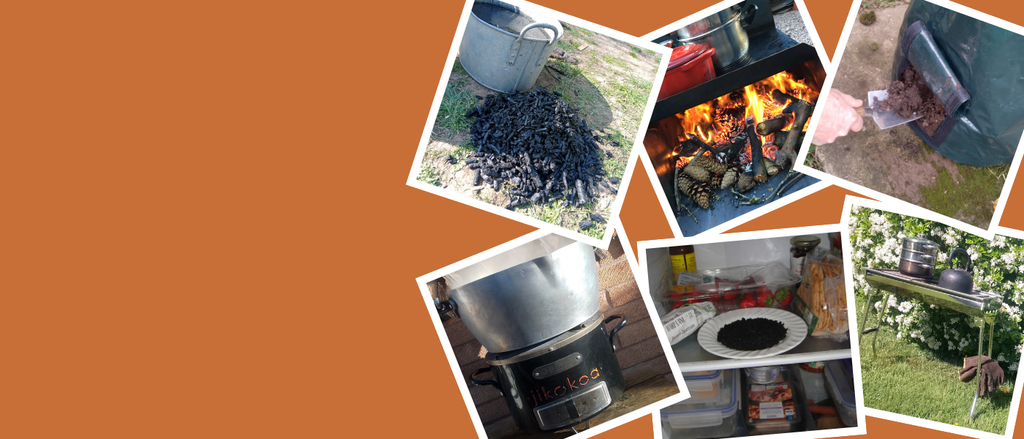
Using your Biochar
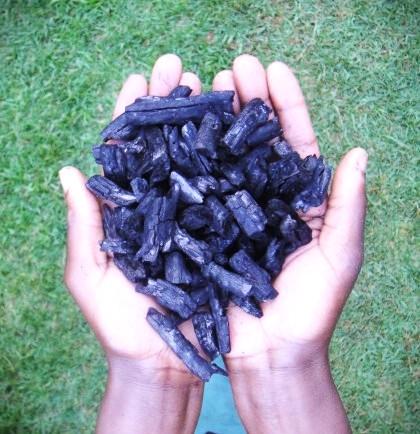
Making biochar
Why make biochar when you can just buy it? There are a couple of answers to this question. A lot of commercially available biochar isn’t actually biochar. It is small pieces of ordinary charcoal. Charcoal is made with no air present; it is dense and has a very limited ability to adsorb particles. Without the ability to adsorb, charcoal will not work as a soil amender. It can’t hold onto water or nutrients. You may as well add stones to your compost! It isn’t always clear what the source materials are for the biochar you are buying. If you make your own biochar, you will know exactly where it has come from and how it will perform. All Tawi stoves have been specifically designed to produce highly adsorbent biochar. You can make your own biochar from fallen sticks and pruning; material you normally have to discard. Making biochar turns a waste product into a resource.
We recommend you purchase a large 10mm mesh soil seize to grade your biochar. The particles that fall through the mesh are perfect for use in your compost. The larger particles are ideal for use as fuel.
Biochar as a compost enhancer
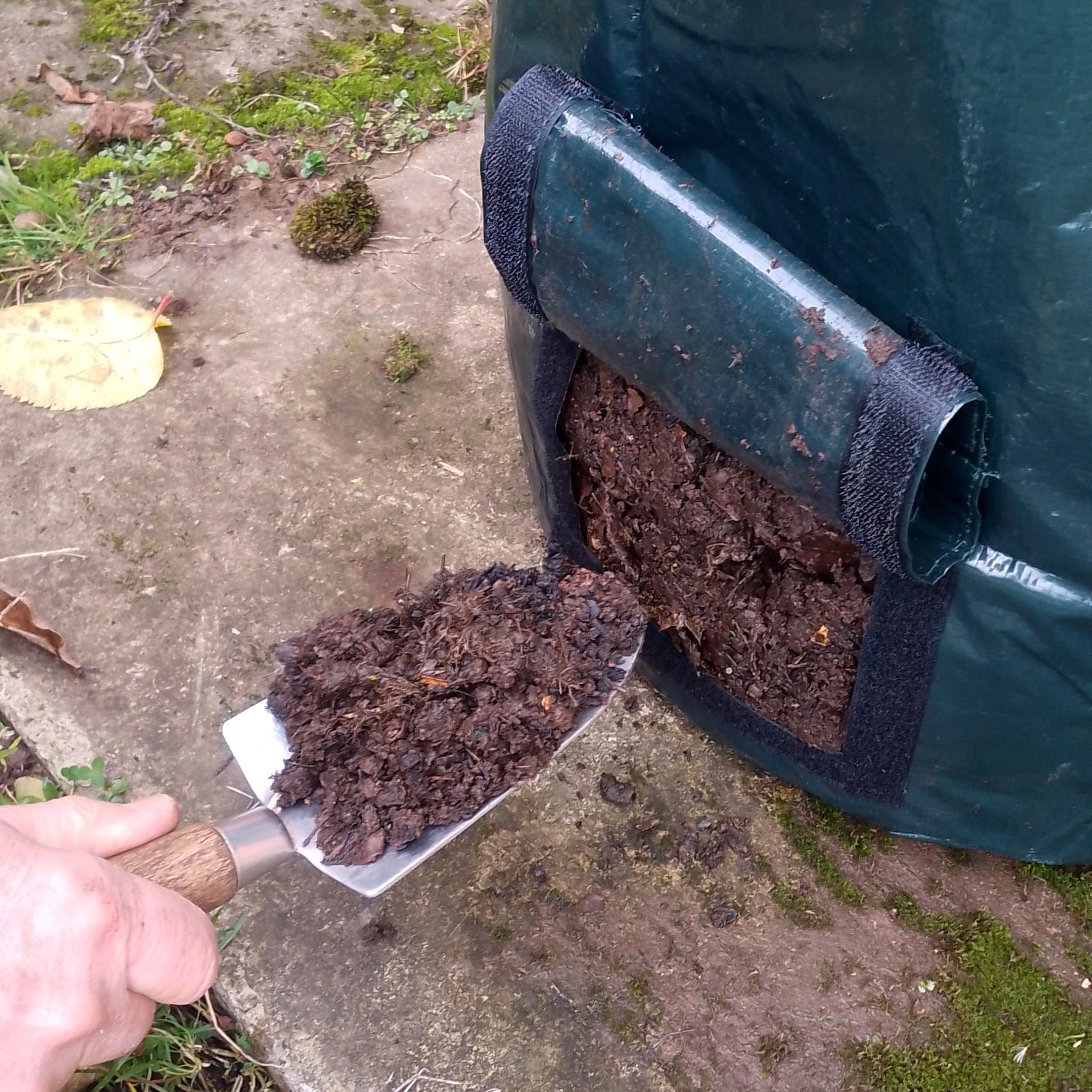
In your compost pit / container add about 10% biochar by volume to your organic waste. Alternatively, you can add the biochar to your kitchen compost bin where it will perform the added function of deodorising it.
When your compost is ready to put on your garden, the biochar within the biochar-enhanced compost will be fully enriched with nutrients and moisture. This will give your compost the best chance of doing some good. Apply the enhanced compost in the normal way.
Capture carbon dioxide
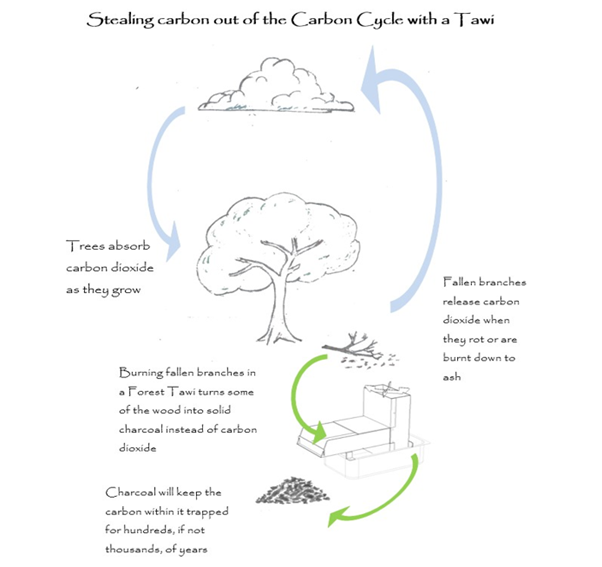
Plants convert carbon dioxide into living matter as they grow; they, like everything else living on this planet, are carbon-based. When that plant or tree dies, it rots and the carbon within it turns back into carbon dioxide. The same thing happens if you burn the plant down to ash. That’s the carbon cycle.
Biochar is promoted as a viable way to prevent carbon stored in plant tissue from re-entering the atmosphere as carbon dioxide. Biochar is carbon in a stable form, mostly. By not burning the plant tissue down to ash you preserve some of the carbon within that tissue in a form that does not degrade. Some of the carbon within biochar will decompose over a relatively short period of time; that can be discounted. We are only interested in the stable carbon content. Tawi biochar has an extremely high stable carbon content; >90%. You can use the following procedure and formula to calculate how much carbon you are sequestering:
You can either make quenched biochar or dry biochar in a Tawi outdoor stove. To make dry biochar you scrape the biochar out of the front of the Tawi outdoor stove into a metal container with an airtight lid. You must leave the container sealed for at least 30 minutes to ensure the biochar is completely extinguished. Before you weigh your home-made biochar, you must remove any wood that has not been completely turned into biochar. Biochar breaks easily, so this isn’t difficult. You then need to weigh the biochar and reduce that weight by 10% to allow for the unstable carbon content, i.e. the carbon element that will degrade quickly. You now have the stable carbon weight. Next, multiply that figure by 3.5 to give you the approximate amount of carbon dioxide you have sequestered.
Example:
Dry weight of biochar: 200g
200g x 0.9 = 180g stable carbon
180g x 3.5 = 630g approximate weight of carbon dioxide sequestered
If your biochar has come out of the quenching tank you need to make an allowance for the water saturated within the biochar. To do this, strain the biochar out of the water. Remove any unconverted wood as above. Allow the charcoal to drain for 10 minutes and then weigh it. Divide that weight figure by 3 to give you an equivalent dry weight. Follow the above procedure.
Example:
Wet weight of biochar: 600g
600g / 3 = 200g dry charcoal equivalent
200g x 0.9 = 180g stable carbon
180g x 3.5 = 630g approximate weight of carbon dioxide sequestered
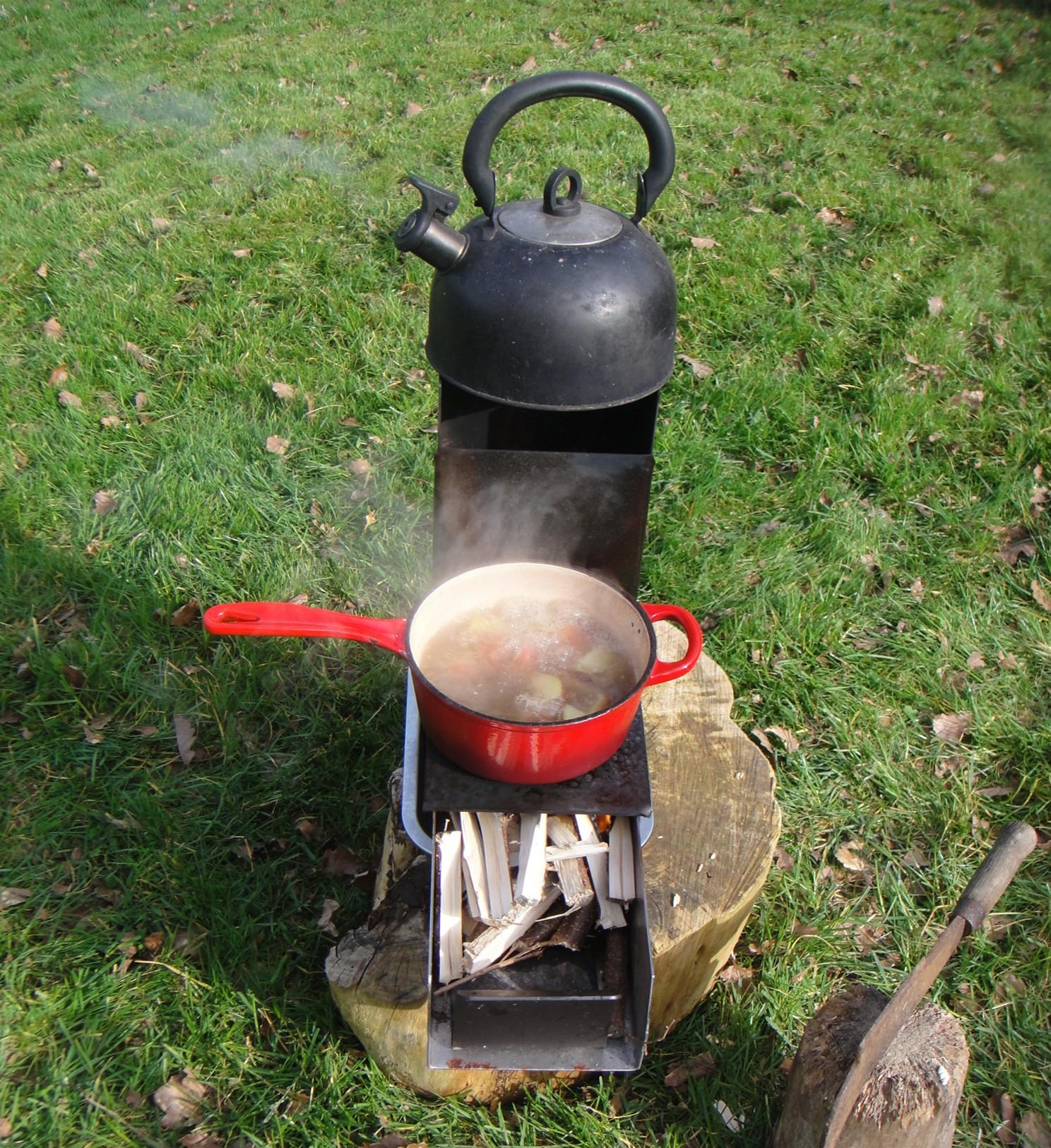
Using the heat released while making biochar
Becoming more self-reliant and using the resources available to us efficiently is becoming more of a necessity than a lifestyle choice.
Converting wood into biochar produces a lot of heat. Most of us are familiar with cooking over an open fire or fire pit. However, making biochar requires more attention to the process than just adding sticks to an open fire. All Tawi outdoor stoves have at least two cooking surfaces. We know that these get more than hot enough to prepare food on. Tawi outdoor stoves can be used as an alternative to a barbecue. The difference being that this is ‘carbon negative’ cooking!
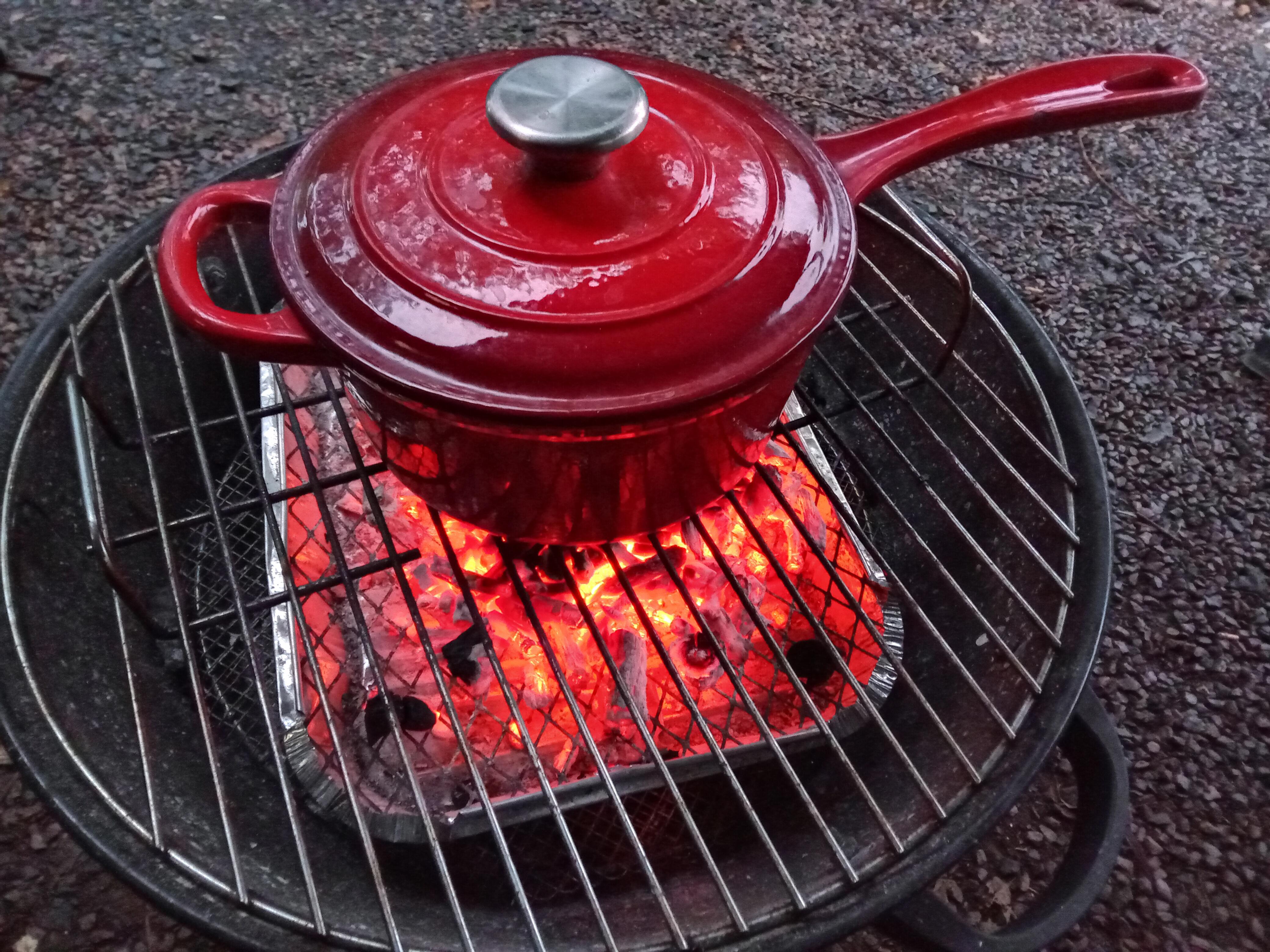
Biochar as an alternative to barbecue charcoal
Making charcoal is an extremely dirty and polluting process, even when modern retorts are used. Over 90% of our barbecue charcoal is imported, and most of that comes from unsustainable sources. Finding a viable alternative to tradition charcoal should be a global environmental priority. Home-made biochar could be part of the solution.
The only material difference between biochar and barbecue charcoal is that barbecue charcoal still contains many of the oils and tars of the wood it was made from. Biochar has had these more volatile elements burnt off. Charcoal is denser and has a higher calorific value by volume; but not by weight. Barbecue charcoal also comes in bigger lumps. In both types it is the burning of the carbon element that produces the intense heat we are accustomed to. Biochar does have a few advantages over tradition charcoal. It burns cleanly almost as soon at it is lit. Barbecue charcoal should be left for at least 40 minutes after lighting to allow the more volatile, harmful elements to burn off. Biochar is less dense, comes in smaller pieces and has a greater surface area. This does mean it burns faster than traditional charcoal.
We have used biochar as a fuel for heat sterilizing water and cooking for over 20 years, mostly in Kenya. We find it a versatile, high-energy fuel. There is no doubt that using our own biochar as a fuel has saved us a lot of money over the years. We mainly use a charcoal-burning stove called a Jiko (see our website), designed in America for the African market, it burns biochar extremely efficiently. Why not change the way you barbecue? It is very rewarding using a fuel you have made yourself, for free!
As a rule of thumb, running the Tawi Harvester for an hour will give you two hours of biochar fuel for a Jiko stove. (Will provide sufficient heat to simmer a pan of water for two hours).
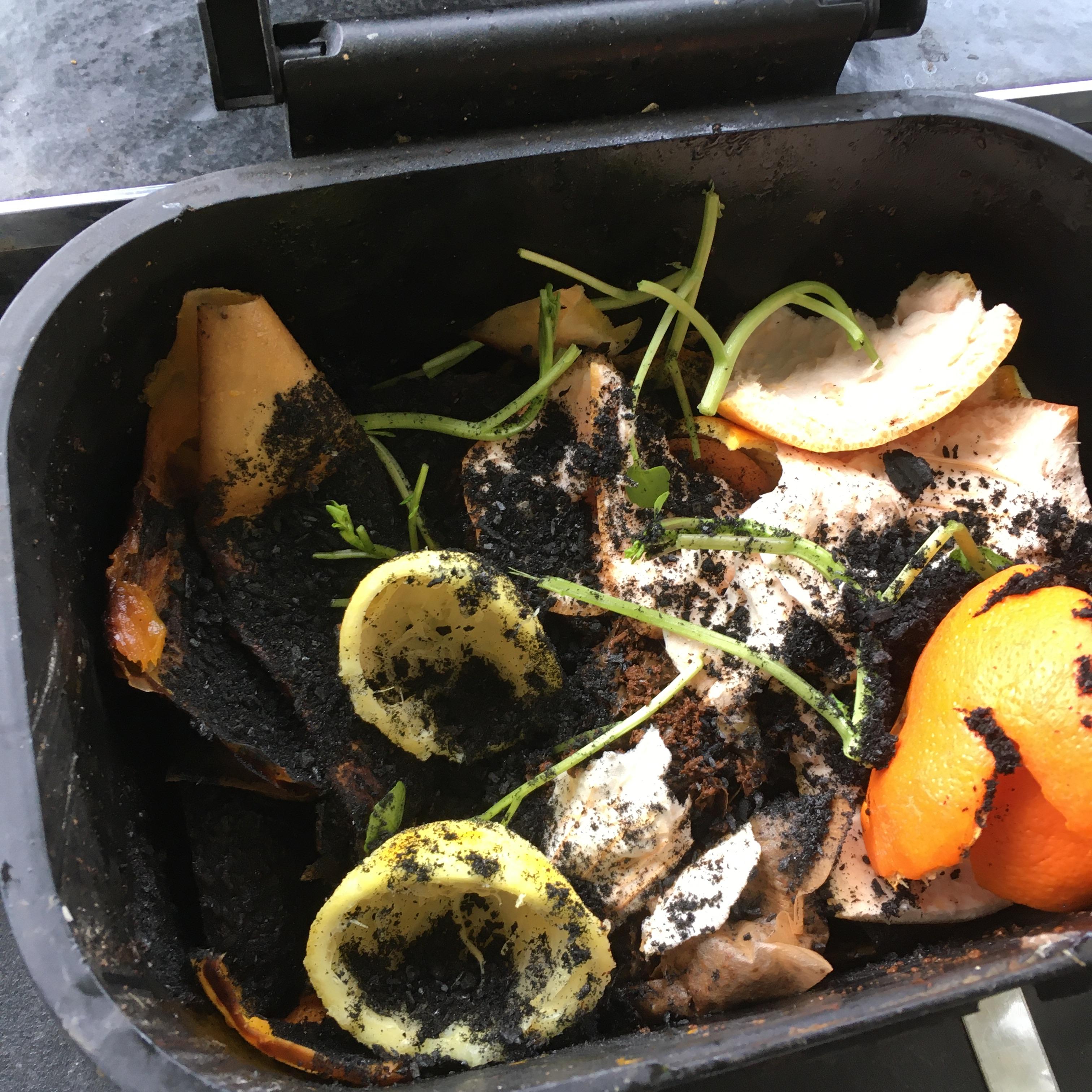
Biochar as an effective deodorizer
The biochar made in all our Tawi stoves is highly adsorbent. That gives it the ability to act as an effective deodorizer around the home; from your bins to your fridge.
How does biochar act as a deodorizer? Tawi biochar has a very large surface area. Scent particles are actively pulled out of the air into the sponge-like structure (primarily using the Van der Waals force) where they adhere to the surface of the biochar. This process is called adsorption; the particles are being added to the structure (not to be confused with absorption).
Use biochar that has been quenched and partially dried; less dust. The smaller the particles, the more effective the biochar will be as a deodorizer. If you want to maximise the effect, grind the biochar into a powder. To use it in your bins simply sprinkle the biochar inside. For compost bins, add biochar every time you add organic matter. Around the home, place the biochar on a dish or in a bowl and leave it open to the air. This works well in fridges and small spaces. If you are worried about it being spilt you can use a finely woven cloth bag; however uncovered is always better.
If you want to test the deodorizing effectiveness of your biochar, find two jam jars of the same size with airtight lids. Place half a banana skin in each jar. Place a teaspoon of biochar in one of the jars. Screw the lids on. Leave the jars sealed for at least 30 minutes. Close your eyes, mix the jars up and do a ‘blind’ smell test on each. It should be obvious which jar has the biochar inside.
Try it in your bins and around your home. Biochar is a far healthier alternative to chemical deodorizers; and it’s free!